

 Zuhause /
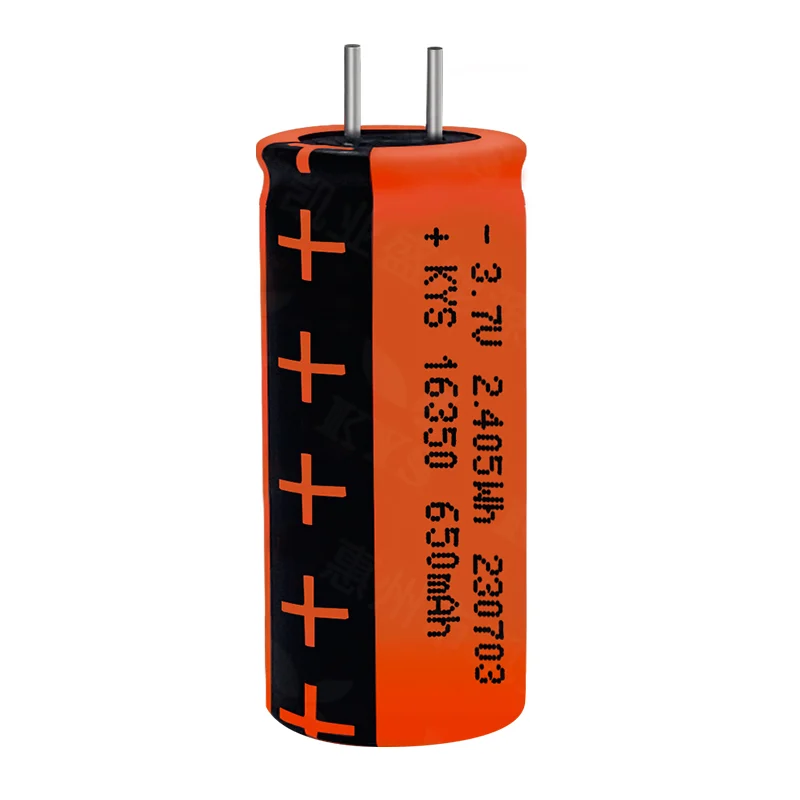
 16350 3,7V zylindrische Lithium-Batteriezelle
Reliable 16350 lithium battery with high capacity and low self-discharge. Delivers powerful, long-lasting performance for everyday electronics like e-cigarettes, headphones, POS devices, beauty tools, toys, and medical gear. Built-in safety protections and customizable options available. Compact and durable.
- Model: 16350 Lithium-Ion Capacitor
- Cell Size: 16.3(Diameter)×35.7 mm
- Nennspannung: 3,7 V
- Entladungsstrom: 3 A
- Kapazität: 620~650 mAh
- Innenwiderstand: 45 mΩ
- Anwendungsbereich: Elektronische Produkte
- Ladespannung: 4,2 V
 Kostenloses Angebot erhalten
Zurück zur Produktliste
Überblick
Cylindrical Lithium Battery Cell Structure Overview
Engineers construct the cylindrical lithium battery cell (16350 class, 3.7V nominal) using a compact spiral-wound architecture. First, they laminate cathode foil, anode foil, and separator membrane into a continuous electrode strip, and they wind it into a tightly controlled cylindrical core. Meanwhile, technicians regulate winding tension to keep layer spacing uniform and prevent internal misalignment. After that, they insert the rolled core into a precision metal shell and stabilize its position before electrolyte injection and sealing operations begin.
Material System and Electrochemical Composition
Manufacturers coat lithium transition-metal oxide onto aluminum foil to form the cathode layer, while they apply graphite-based slurry onto copper foil to build the anode layer. In addition, they introduce a PP/PE microporous separator to maintain ionic conduction while blocking direct electrode contact. Furthermore, they prepare an organic carbonate electrolyte containing lithium hexafluorophosphate (LiPF6), and they strictly control moisture content during handling. Meanwhile, the cylindrical housing uses steel or aluminum alloy to ensure mechanical strength and pressure resistance during assembly.
Elektrodenfertigung und Wicklungsprozess
Technicians prepare electrode slurry by mixing active materials, conductive carbon, and polymer binders into a uniform suspension. Then, they coat the slurry onto metallic current collectors using precision coating equipment and dry it through staged thermal ovens. Subsequently, they apply calendaring pressure to control thickness and density consistency. After cutting the electrodes into narrow strips, they feed them into automated winding machines to form a compact jelly-roll structure. At the same time, they weld electrode tabs using ultrasonic or resistance techniques to ensure stable electrical connection.
Formationszyklus und Standard-Compliance-System
Engineers initiate formation cycling to activate electrochemical reactions and stabilize the solid electrolyte interphase layer inside the cell. Then, they conduct aging tests under controlled temperature environments to evaluate voltage stability and impedance behavior. Finally, quality teams perform dimensional inspection, internal resistance measurement, and sealing verification. Throughout production, manufacturers comply with IEC 62133 and UN38.3 standards, ensuring structural integrity, electrical consistency, and transport safety compliance for cylindrical lithium battery cell manufacturing.
Produktdetails
Produktmerkmale
- 🛠️ Anpassbar
Anpassbar, um Kundenanforderungen zu erfüllen - ⚡ Hochleistung
Maximal 20°C verfügbare Entladungsrate - ⏱️ Lange Zykluszeit
Erfüllt langfristige Produktnutzungsbedürfnisse - 🛡️ Hohe Sicherheit
Umfassende Sicherheitstests bestanden - 🔋 Wahre Nennkapazität
Entspricht der Produktdesignkapazität - ⚛️ Multi-Chemie-Optionen
Deckt LCO-, NCM-, NCA- und LFP-Systeme ab - 🧰 Mehrfachschutzmechanismus
Eingebaute Schutzplatte mit Überladungs-, Überentladungs-, Überstrom- und Kurzschlussschutz
Produktanwendungsgebiete
Dieses Produkt eignet sich für eine Vielzahl tragbarer und elektrischer elektronischer Geräte mit typischen Anwendungen darunter:
-
Körperpflege & Gesundheit: Elektrische Zahnbürsten, Schönheitsgeräte, Fitnesstracker, medizinische Geräte
-
Smart Digital & Audio: Kopfhörer, Lautsprecher, Vernebler, Spielzeug, Lichter
-
Finanzzahlung & Büro: POS-Maschinen, USB-Token, tragbare Drucker
Technische Parameter
| Modell | KYS 16350 |
| Zellgröße | 16.3(Diameter)×35.7 mm |
| Entladungsstrom | 3 A |
| Betriebsspannung | 3,7 V |
| Kapazität | 620~650 mAh |
| Innerer Widerstand | 45 mΩ |
| Verarbeitungsmethode | Angepasst pro Anfrage |
| Anwendungsbereich | Elektronische Produkte |
| Ladespannung | 4,2 V |