

 Zuhause /
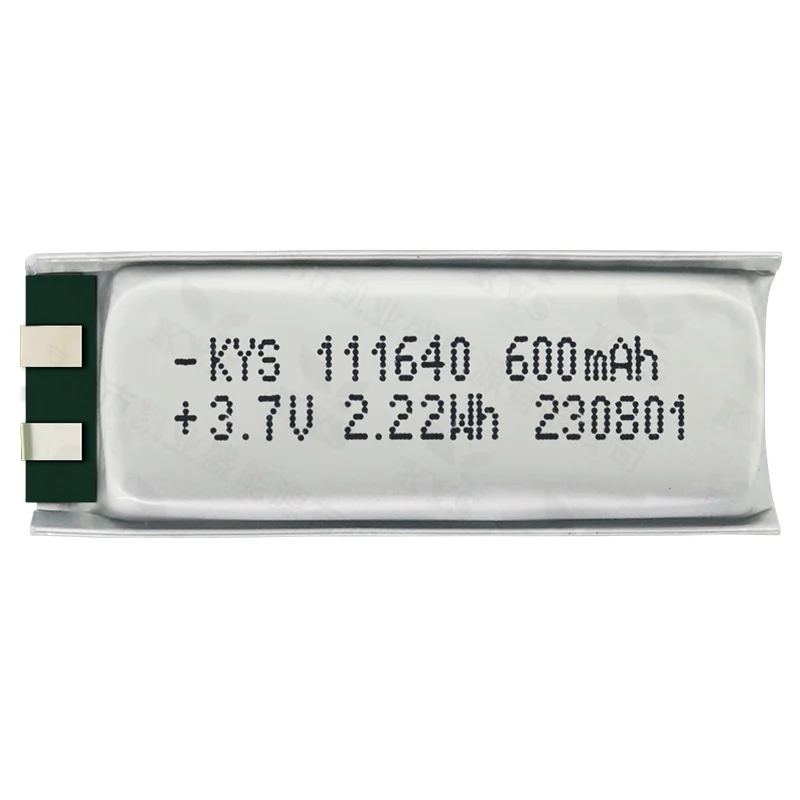
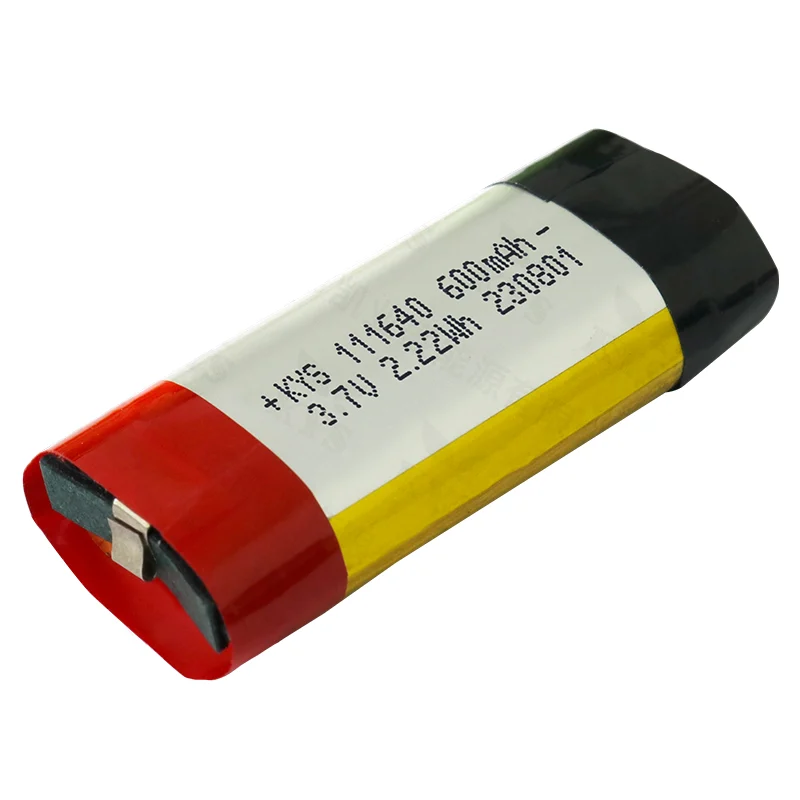
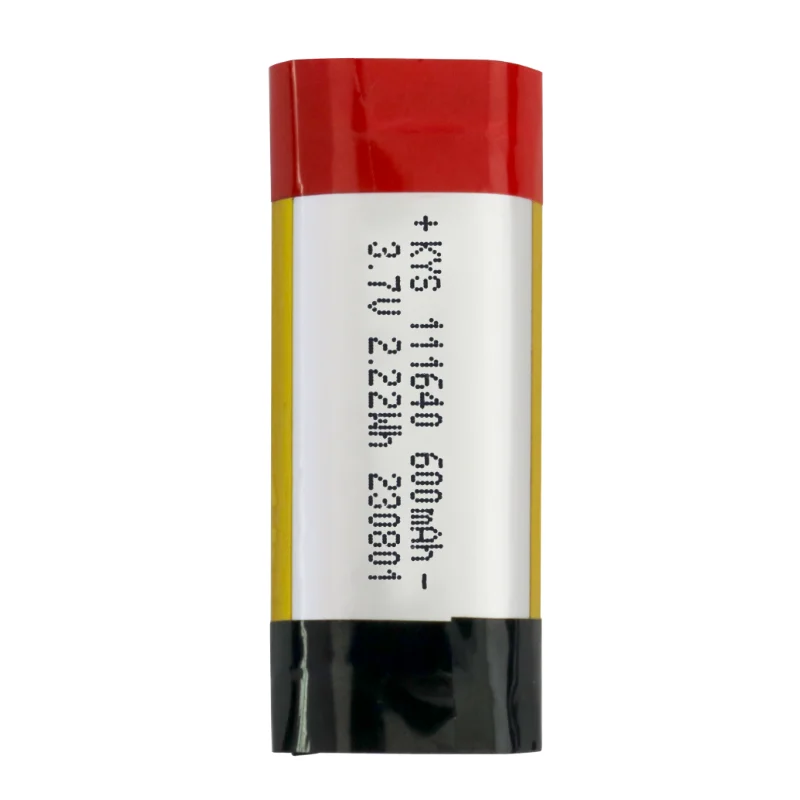
 111640 Lithium-Polymer-Taschenbatterie
This KYS 111640 3.7V lithium battery boasts stable voltage, low self-discharge and long cycle life. Built-in full protection system ensures great safety. It supports customized production, high-power discharge and fits a wide range of portable electronic devices.
- Modell: KYS 111640
- Cell Size: 11×16×40 mm
- Nennspannung: 3,7 V
- Entladungsstrom: 3 A
- Leistung: 600 mAh
- Innenwiderstand: 60 mΩ
- Anwendung: Elektronische Produkte
- Ladespannung: 4,2 V
 Kostenloses Angebot erhalten
Zurück zur Produktliste
Überblick
Lithium Polymer Pouch Battery Structure Description
Manufacturers construct the lithium polymer pouch battery with tabs on opposite ends by stacking electrode layers inside an aluminum-plastic pouch. First, they align cathode and anode sheets in a precise staggered layout, and they insert a microporous separator between them to maintain electrical isolation. Then, engineers extend current collector tabs toward opposite directions, and they fix the alignment during the stacking process. After that, workers place the completed electrode assembly into the pouch casing and adjust its position carefully before sealing preparation begins.
Material Composition and Layer Design
Producers coat lithium metal oxide materials onto aluminum foil to form the cathode layer, and they apply graphite-based slurry onto copper foil to create the anode layer. Meanwhile, they introduce a polyethylene and polypropylene multilayer separator to support ion transport while blocking internal contact. In addition, they select aluminum-plastic composite film as the outer enclosure material, and this structure combines barrier protection with mechanical flexibility. Next, technicians inject lithium salt electrolyte dissolved in organic carbonate solvents, and they ensure uniform penetration across all electrode surfaces.
Electrode Tab Configuration and Connection Method
Engineers position aluminum cathode tabs and copper or nickel-coated anode tabs at opposite ends of the cell. Then, they weld the tabs to the current collectors using ultrasonic or resistance welding equipment. At the same time, they reinforce the tab exit area with insulation materials to prevent edge shorting. After welding, operators route the tabs out of the pouch carefully, and they verify alignment to avoid stress on internal layers before sealing.
Standards and Manufacturing Control System
Quality teams follow IEC 62133 and UN38.3 standards throughout production. They inspect dimensions, test weld strength, and measure insulation resistance at multiple stages. In addition, they grade capacity and match internal resistance to maintain batch consistency. Finally, they run vibration, thermal shock, and high-temperature storage tests, and they verify that each cell meets required safety and manufacturing specifications.
Produktdetails
Produktmerkmale
- 🛠️ Anpassbar
Anpassbar, um Kundenanforderungen zu erfüllen - ⚡ Hochleistung
Maximal 20°C verfügbare Entladungsrate - ⏱️ Lange Zykluszeit
Erfüllt langfristige Produktnutzungsbedürfnisse - 🛡️ Hohe Sicherheit
Umfassende Sicherheitstests bestanden - 🔋 Wahre Nennkapazität
Entspricht der Produktdesignkapazität - ⚛️ Multi-Chemie-Optionen
Deckt LCO-, NCM-, NCA- und LFP-Systeme ab - 🧰 Mehrfachschutzmechanismus
Eingebaute Schutzplatte mit Überladungs-, Überentladungs-, Überstrom- und Kurzschlussschutz
Produktanwendungsgebiete
Dieses Produkt eignet sich für eine Vielzahl tragbarer und elektrischer elektronischer Geräte mit typischen Anwendungen darunter:
-
Körperpflege & Gesundheit: Elektrische Zahnbürsten, Schönheitsgeräte, Fitnesstracker, medizinische Geräte
-
Smart Digital & Audio: Kopfhörer, Lautsprecher, Vernebler, Spielzeug, Lichter
-
Finanzzahlung & Büro: POS-Maschinen, USB-Token, tragbare Drucker
Technische Parameter
| Modell | KYS 111640 |
| Marke | KISS |
| Zellgröße | 11×16×40 mm |
| Entladungsstrom | 3 A |
| Betriebsspannung | 3,7 V |
| Kapazität | 600 mAh(3A Discharge) |
| Innerer Widerstand | 60 mΩ |
| Anpassung | Individuell verfügbar |
| Anwendung | Elektronische Geräte, Verdampfer |
| Ladespannung | 4,2 V |