


 Zuhause /
 Warum ein hochladender wiederaufladbarer Akku für Taschenlampen länger hell bleibt


Inhaltsverzeichnis
- 1. Why the Brightness of Flashlights Diminishes: Voltage Sag
- 2. Characteristics of High-Drain Rechargeable Batteries
- 3. High-Drain VS Standard Rechargeable Flashlight Batteries
- 4. Gloflux High-Drain Battery Designs for Mobile Lighting
- 5. Benefits of High Drain Flashlight Batteries
- 6. High-Drain Flashlight Batteries
A flashlight that appears bright at switch-on but quickly dims under use is usually limited by its power source rather than the LED itself. High-output lighting, especially in emergency and industrial applications, requires that the performance of a rechargeable flashlight battery is defined by the ability to deliver high current without unacceptable voltage drop.
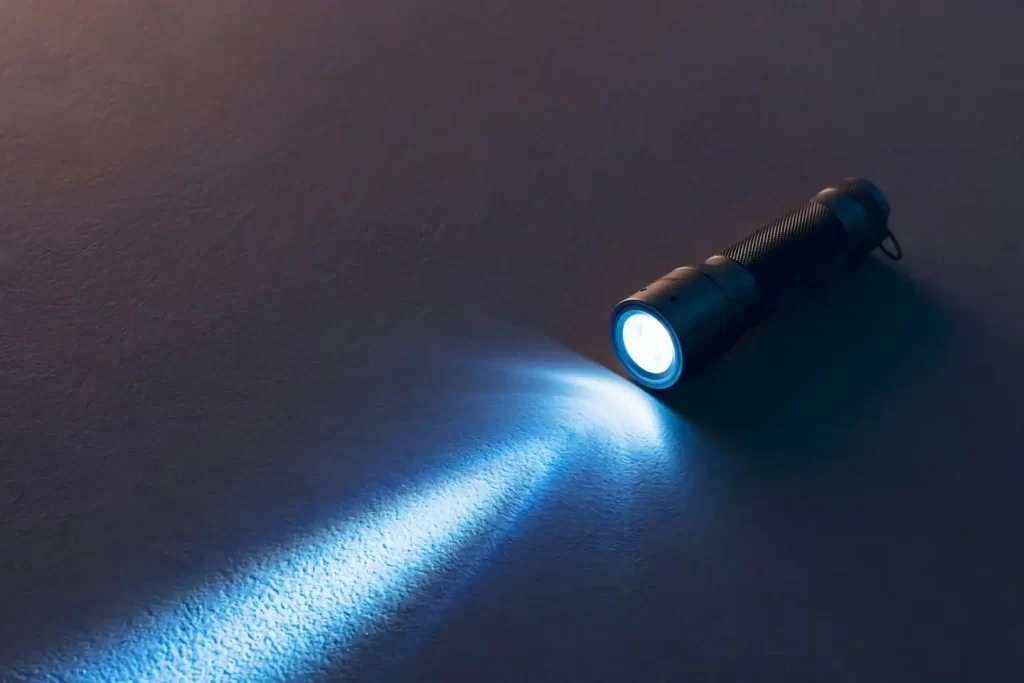
The high-drain rechargeable flashlight battery is designed to offer elevated discharge rates while maintaining stable voltage, resulting in a flashlight that offers sustained brightness and is more useful and safe to operate in real-world stressful situations.
This behavior is explained technically here, as well as the approach taken by mobile lighting battery manufacturers like Gloflux in the design and construction of their high-drain batteries.
1. Why the Brightness of Flashlights Diminishes: Voltage Sag
To achieve consistent brightness, LED flashlights require relatively stable voltage and current. When a flashlight's battery begins to fail, the current delivered by the battery is no longer sufficient and the output performance of the flashlight is diminished.
Voltage Sag Under Load
Voltage sag is the temporary drop of voltage in a battery when a high current is suddenly demanded. With tactical flashlights, this may result in:
•Ineffective LED driver Control
•Automatic step-down to lower brightness levels
•Easily perceivable brightness reduction
Innerer Widerstand
The most important of many possible factors that limit performance of a battery is internal resistance. Every lithium-ion cell has internal resistance that is typically assessed at milliohms. As current demand increases:
•Higher cell resistance→ greater voltage drop
•More energy is dissipated
•Less useful power is delivered to the LED driver
Electrochemical Limitations
At the high discharge rates demanded by many applications of rechargeable batteries, transport of lithium-ion within the cells becomes less effective and an increase in polarization loss may further contribute to a relative voltage drop of the cells.
2. Characteristics of High-Drain Rechargeable Batteries
Flashlight-specific high-drain rechargeable batteries are designed to operate with minimal voltage drop when the load is heavy.
Core Attributes
• Low DC Internal Resistance
Batteries with low DC internal resistance can draw high current with low voltage drop. This ensures that the LED driver is always in the optimal operating region.
• Stable Discharge Curve
High-drain cells are able to maintain a stable discharge curve allowing the flashlights to retain brightness over an extended period of time.
• Electrode and Electrolyte Design Optimization
Design improvements have reduced internal resistance to allow rapid discharge.
• High Continuous Discharge
High-drain cells are designed for the high continuous discharge currents that are often required in comparison to typical consumer cell batteries.

3. High-Drain VS Standard Rechargeable Flashlight Batteries
| Performance Aspect | Standard Rechargeable Cell | High-Drain Rechargeable Cell |
| Voltage stability under load | Generally unstable | Stable under load |
| Brightness behavior | Step-down or fading | Quick or sustained |
| Heat generation | High losses at peak load | Low losses at peak load |
| High-load cycle durability | Rapid degradation | Minimal degradation |
4. Gloflux High-Drain Battery Designs for Mobile Lighting
When considering tactical flashlights, headlamps, or other portable lighting equipment, the performance of the battery directly affects the performance of the device. Gloflux balances discharge capability, safety, and thermal stability of its high-drain batteries for portable lighting.
1) Stable High-Output Performance
We design our systems to lessen voltage drop at high currents. This results in systems that sustain their brightness instead of illuminating only short bursts of peak brightness.
2) High-Rate Discharge Optimization
We select and qualify both cell and package designs that enable the demands of prolonged high current. This has positive impacts on the total usable brightness and runtime of the lighting system.
3) Thermal and Environmental Reliability
High internal resistance generally occurs at low temperatures. Validation of performance at both low and high extreme temperatures guarantees the system functionality in the field and in industrial applications.
4) Integrated Safety Control Systems
Battery protection circuitry offers safety features by identifying overcurrent and overtemperature situations, blocking abnormal loads, and ensuring safety, stability, and performance.
5) Form Factor Flexibility
Depending on the specific device construction, either cylindrical or pouch battery cells can be implemented to best feature an optimal configuration of energy density and dimension relative to the rate of discharge.
5. Benefits of High Drain Flashlight Batteries
High-drain batteries perform exceptionally well in scenarios requirng prolonged use of bright, concentrated illumination.
•Search and Rescue Operations: elevated brightness levels are exigent for visibility and avoiding potential hazards.
•Industrial Maintenance: inspections and an elevated level of brightness for visibility are exigent in the process of determining necessary repairs.
•Emergency Preparedness: an unexpected power outage will require an elevated level of brightness.
•Outdoor Recreation: an elevated level of brightness is exigent during low visibility for navigation that is both accurate and precise.
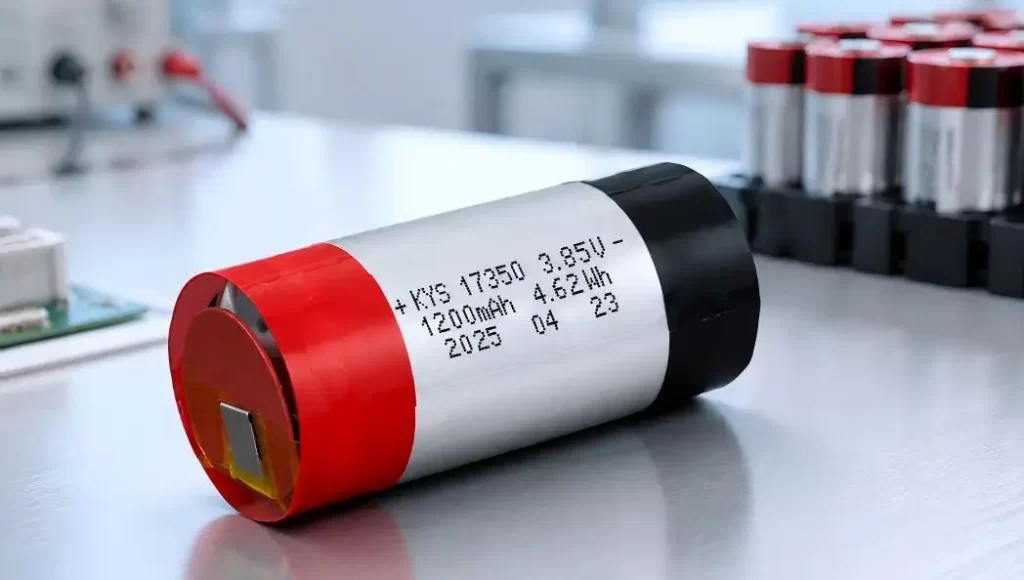
6. High-Drain Flashlight Batteries
1) Ensure Compatibility Between Battery and Device
The flashlight should draw less current than the battery's maximum continuous discharge rating.
2) Evaluate Continuous Discharge Rating (CDR)
Batteries with a higher value CDR than the current draw of the device will reduce voltage sag of the battery and improve the safety margin.
3) Prioritize High-Drain and Low Capacity Trade-Off
High-drain performance will generally result in a somewhat lower capacity. Determine which is more important, run time or brightness, to decide which battery to select.
4) Evaluate Thermal Performance
For high-power and outdoor use lighting, and particularly in variable weather, the performance of the battery will be dictated by the thermal stability of the battery.
Schlussfolgerung
Rechargeable batteries for flashlight use provide performance improvements when cells are optimized to minimize voltage sag and provide stable discharge with higher continuous current demands. High-drain, rechargeable batteries provide useful brightness for long periods of time and even greater reliability for demanding situations.
Gloflux is an example of a high-drain battery manufacturer that has optimized their cells to provide consistent and stable output.
FAQ
Q1. What is a high-drain rechargeable battery?
A battery that delivers high current with a low voltage drop.
Q2. Why does my flashlight dim quickly?
It is usually the result of voltage sag with a standard battery when a high load is applied.
Q3. Does high-drain mean higher capacity?
Not necessarily. High-drain technology stabilizes output, thus affecting capacity.
Q4. Is a high-drain battery better for all flashlights?
No, it is only beneficial with high-lumen or high-current rated flashlights.
Q5. What causes voltage sag in batteries?
It is primarily due to poor internal resistance, and in general, limitation of the chemistry employed in the battery.
Sprechen Sie mit dem Hersteller
Ressourcen & Einblicke
Beste LiPo-Batterie für IoT-Geräte: Wie man die richtige Stromlösung auswählt
2026-07-28
Individuelles 51,8V 30Ah 21700 Lithium-Ionen-Batteriepaket für kommerzielle humanoide Roboter-Stromversorgungssysteme mit integriertem BMS für sicheren und zuverlässigen Betrieb
2026-07-28
Maßgeschneidertes 38,4V 30Ah LiFePO4-Batteriemodul für Roboter mit drahtlosem Ladeanschluss
2026-07-28
24V 36V 48V 52V 60V 72V 40Ah 50Ah LiFePO4 Rechargeable Battery Pack für Wohnmobile, AGVs, Golfcarts und Energiespeichersysteme
2026-07-28


