


 Zuhause /
 Wiederaufladbares 12V 7800mAh 3S3P 18650 Lithium-Ionen-Akkupaket für Ampelampeln


Inhaltsverzeichnis
- Understanding the 3S3P Battery Configuration
- Why 18650 Cells Are Suitable for Traffic Signals
- Stable Power for Traffic Signal Operation
- BMS Protection for Improved Battery Safety
- Charging Requirements
- Customization for Traffic Control Equipment
- Typische Anwendungsgebiete
- Choosing the Right Custom Battery Pack
- Schlussfolgerung
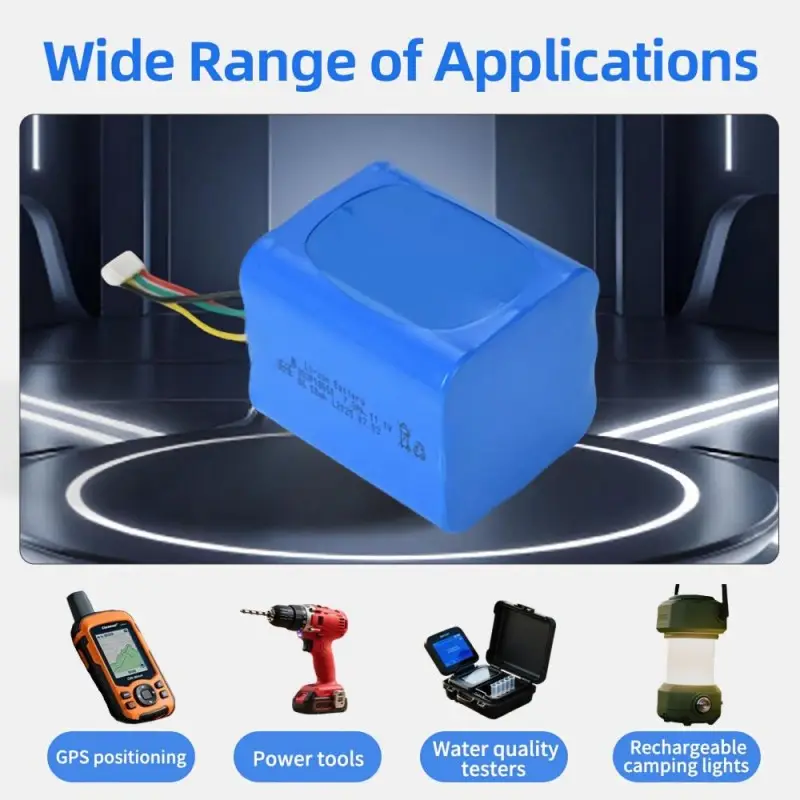
Traffic signal systems must operate reliably in changing weather, temporary road conditions, and locations where a stable grid connection may not always be available. Whether the equipment is used for permanent traffic management, construction work, emergency control, or solar-powered road signaling, the battery must deliver consistent voltage and sufficient operating time.
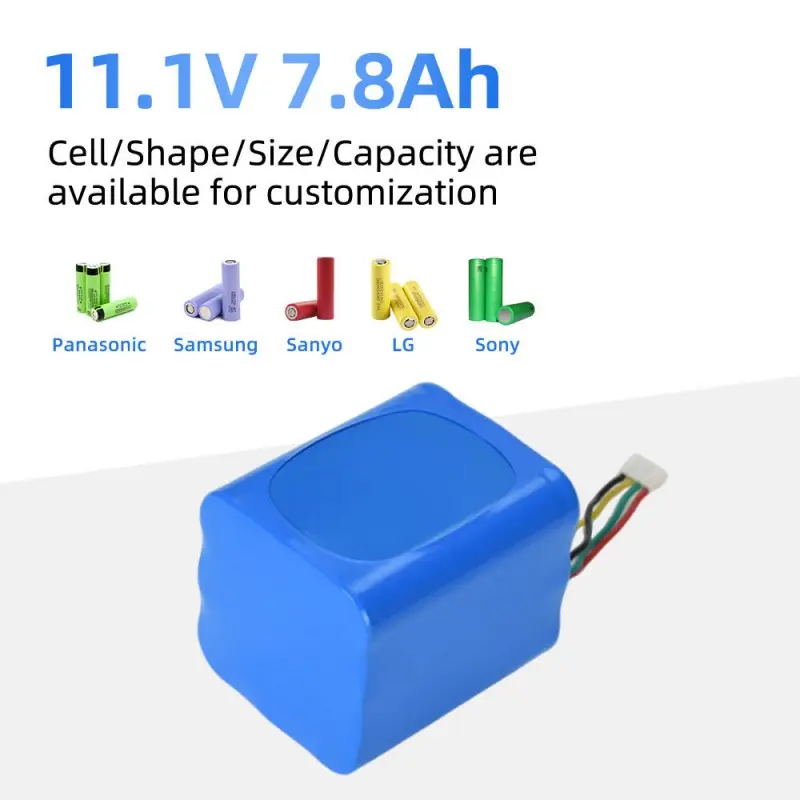
A rechargeable 12V 7800mAh 3S3P 18650 lithium-ion battery pack provides a compact energy solution for traffic signal lights and related road safety equipment. Its 3S3P configuration combines practical capacity, manageable dimensions, and stable output, making it suitable for portable traffic lights, warning lamps, pedestrian signals, and intelligent transportation devices.
Understanding the 3S3P Battery Configuration
The term 3S3P describes how the individual 18650 lithium-ion cells are connected inside the battery pack.
“3S” means three groups of cells are connected in series. A standard lithium-ion cell has a nominal voltage of approximately 3.7V, so three groups connected in series provide a nominal pack voltage of about 11.1V. Because this voltage is widely used with 12V-class equipment, the battery is commonly marketed as a 12V battery pack.
When fully charged, a standard 3S lithium-ion battery pack reaches approximately 12.6V. The traffic signal controller, charger, and electrical load must therefore be compatible with the battery’s actual operating voltage range.
“3P” means three cells are connected in parallel within each series group. If each 18650 cell has a capacity of 2600mAh, connecting three cells in parallel produces a total capacity of 7800mAh. A complete 3S3P pack contains nine individual cells.
This configuration provides a useful balance between stored energy and physical size, especially for equipment that must remain portable or fit inside a limited battery compartment.
Why 18650 Cells Are Suitable for Traffic Signals
18650 lithium-ion cells are widely used in rechargeable equipment because of their standardized cylindrical shape, high energy density, and flexible pack configuration.
For traffic signal applications, space and weight can be important. Portable traffic lights may need to be moved between construction zones, road repair sites, and temporary intersections. A compact lithium-ion battery can reduce equipment weight compared with some traditional battery technologies while still providing adequate operating time.
The cylindrical cell structure also allows engineers to arrange the battery in different shapes. Depending on the available installation space, the nine cells may be positioned in a flat, rectangular, or stacked layout.
However, the finished battery performance depends on more than the cell format. Cells should be carefully matched according to capacity, internal resistance, voltage, and self-discharge characteristics. Consistent cells help the battery charge and discharge more evenly and reduce the risk of one cell group reaching its voltage limit earlier than the others.
Stable Power for Traffic Signal Operation
Traffic lights and warning systems require dependable power because unstable output may affect signal visibility, controller performance, or operating time.
A 12V 7800mAh battery pack can supply energy to LED traffic lights, control boards, wireless communication modules, timers, sensors, and warning devices. LED technology generally consumes less energy than traditional lighting, allowing a properly sized battery pack to support extended operating periods.
Actual runtime depends on several factors, including:
- Total equipment power consumption
- Number and brightness of LED modules
- Signal switching frequency
- Controller and communication power use
- Umgebungstemperatur
- Batteriealter und Zustand
- Required reserve capacity
For temporary road signals, the battery may need to operate continuously between scheduled charging periods. For solar-powered signals, the battery must store enough daytime energy to support nighttime operation and periods of weak sunlight.
Battery capacity should therefore be selected according to the complete system load rather than the LED lamp rating alone.
BMS Protection for Improved Battery Safety
A battery management system is an essential component of a custom lithium-ion battery pack. The BMS monitors pack voltage, current, and operating conditions while helping protect the cells from electrical abuse.
Typical BMS functions include overcharge protection, over-discharge protection, overcurrent protection, short-circuit protection, and cell balancing. Temperature monitoring can also be included when required by the application.
Overcharge protection helps prevent the cell voltage from exceeding its safe limit during charging. Over-discharge protection disconnects the load before the battery voltage falls too low. Overcurrent and short-circuit protection respond to abnormal loads or wiring faults.
Cell balancing helps reduce voltage differences between the three series-connected groups. This is important because an unbalanced pack may lose usable capacity or activate protection earlier than expected.
The BMS current rating should match the traffic signal’s normal operating current and possible startup or peak current. An undersized BMS may cause unnecessary shutdowns, while unsuitable protection settings can affect reliability.
Charging Requirements
A standard 3S lithium-ion battery pack normally requires a charging voltage of 12.6V. The charger should use a suitable constant-current and constant-voltage charging method designed for lithium-ion chemistry.
Using a charger intended for lead-acid, LiFePO4, or another battery configuration may result in incomplete charging, protection activation, or unsafe voltage conditions.
For solar traffic signal systems, the solar controller must support a 3S lithium-ion battery. Charging voltage, charging current, low-voltage cut-off, and recovery settings should be coordinated with the BMS.
The solar panel should also provide enough power to recharge the battery within the available daylight hours. In regions with frequent cloudy weather, a larger panel or additional battery capacity may be required.
Customization for Traffic Control Equipment
Traffic signal products vary in size, structure, power consumption, and installation method. A custom battery pack can be adjusted to match the equipment rather than requiring the equipment manufacturer to redesign the entire enclosure.
Verfügbare Anpassungsoptionen können sein:
- Battery dimensions and cell layout
- Plastic housing, metal casing, or PVC wrapping
- Stecker und Klemmentyp
- Cable length and wire specification
- Separate charging and discharge ports
- BMS current and protection parameters
- Temperatursensor
- Battery level indicator
- Kommunikationsfunktionen
- Waterproofing and insulation structure
- Mounting bracket or fixing point
For outdoor applications, the battery enclosure should protect against moisture, dust, vibration, impact, and cable movement. The battery should not be exposed directly to rain or prolonged high temperatures unless the enclosure and cell selection are designed for those conditions.
Typische Anwendungsgebiete
The rechargeable 12V 7800mAh 3S3P battery pack can support many transportation and road safety products. Common applications include portable traffic signal lights, temporary intersection signals, solar traffic lights, pedestrian crossing systems, road construction warning lamps, barricade lights, emergency traffic equipment, lane control signals, parking guidance devices, and intelligent transportation systems.
It can also be used as the main power source or as a backup battery when continuous operation is required during power interruptions.
Choosing the Right Custom Battery Pack
Before developing a battery for traffic signal equipment, buyers should provide complete technical requirements. These include nominal voltage, operating voltage range, average current, peak current, required runtime, charging method, battery compartment dimensions, connector type, working temperature, and enclosure requirements.
The battery manufacturer can then select suitable cells, BMS parameters, wire specifications, insulation materials, and pack construction.
A well-designed battery should fit the equipment correctly, charge safely, provide predictable operating time, and withstand normal transportation and installation conditions.
Schlussfolgerung
The rechargeable 12V 7800mAh 3S3P 18650 lithium-ion battery pack offers a compact and flexible power solution for traffic signal lights and outdoor warning equipment. Its nine-cell configuration provides an 11.1V nominal output, 12.6V full-charge voltage, and 7.8Ah capacity for dependable daily operation.
By combining matched 18650 cells, suitable BMS protection, compatible charging equipment, and a customized enclosure, the battery can provide stable performance across portable, temporary, solar-powered, and emergency traffic applications.
What does 3S3P mean in an 18650 battery pack?
A 3S3P battery contains three series-connected groups, with three cells connected in parallel in each group. The complete battery pack uses nine 18650 cells.
Is this battery really 12V?
The battery has a nominal voltage of approximately 11.1V and a full-charge voltage of 12.6V. It is commonly described as a 12V-class lithium-ion battery.
How long can a 7800mAh battery power a traffic light?
Runtime depends on the total current consumption of the LEDs, controller, sensors, and communication modules. The complete equipment load must be measured before estimating operating time.
Does the battery include a BMS?
The battery can include a BMS with overcharge, over-discharge, overcurrent, short-circuit, balancing, and optional temperature protection.
Can the battery dimensions and connector be customized?
Yes. The cell layout, dimensions, housing, connector, cable length, BMS rating, charging port, and discharge port can be customized for different traffic signal systems.
Sprechen Sie mit dem Hersteller
Ressourcen & Einblicke

Hersteller von maßgeschneidertem Batteriepack-Design: Vom Batteriekonzept zur zuverlässigen Produktion
2026-07-30
Wiederaufladbares 12V 7800mAh 3S3P 18650 Lithium-Ionen-Akkupaket für Ampelampeln
2026-07-30
24V 10Ah–13Ah 7S5P 18650 Lithium-Ionen-Batteriepack für Solarstraßenbeleuchtung
2026-07-30
Individuelle LiFePO4-Batteriepacks mit 18650, 26650 oder 32700 Zellen, 6,4V–12,8V, 6Ah–45Ah für LED- und Solarstraßenbeleuchtung
2026-07-30


